Body
Certain conventions are used to represent three-dimensional structures of organic molecules on paper. Using simple lines, solid (dark), and dashed wedges, a 3D image of a molecule can be perceived on two-dimensional paper.
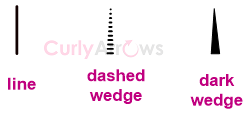
A thick solid (or heavy) line or a solid wedge indicates a bond lying above the plane of the paper and projecting towards the observer.

A dashed wedge represents a bond lying below the plane of the paper and projecting away from the observer.

The bonds lying in the plane of the paper are shown using a normal line.

Other examples are n-butane with carbon atoms having tetrahedral geometry and 2-butene with trigonal geometry.

Next - 3D organic structure drawing rules- Best Practices