Why does PCl3 fume in the presence of moisture?
In the presence of moisture, PCl3 undergoes hydrolysis to release fumes of HCl gas.
PCl3 + 3H2O → H3PO3 + 3HCl
The reaction mechanism is shown as,

In the presence of moisture, PCl3 undergoes hydrolysis to release fumes of HCl gas.
PCl3 + 3H2O → H3PO3 + 3HCl
The reaction mechanism is shown as,
Free radicals are generated due to the homolytic bond cleavage, a type of bond breaking where each atom holding the two-electron covalent bond gets one electron. Such a homolytic bond cleavage requires an input of energy, either in the form of heat or light.

The discovery of isomerism marked the advent of structural chemistry, where it became significantly important to establish structural formulas, welcome the abundance of structurally diverse compounds, classify them, and study their individual properties and impacts.
- As the Crystalline solids are made up of a large number of unit cells extending in all the three dimensions, properties of the unit cell dictate the properties of the crystalline solid.
- Each unit cell has a fixed value for the length of the edges and the angle between the edges.
IUPAC, an international body engaged in developing standards for naming chemical elements and compounds, has laid several rules known as 'IUPAC rules' to identify a molecule by its parent alkane chain and the functional group. It has assigned various suffixes to identify organic chemistry's commonly seen functional groups.
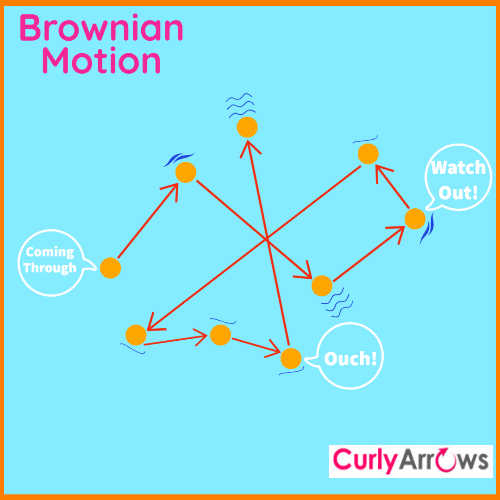
On a fine morning in 1827, botanist Robert Brown had no idea that a simple observation through his microscope would lead to the discovery of invisible matter.

Electrophiles are electron-deficient atoms or molecules that accept electrons from donors, the nucleophile.
The molecule H2N-NH2, also known as hydrazine, each Nitrogen atom has 3 bond pairs (two N-H and one N-N bonds) and one lone pair. So, the steric number of each Nitrogen atom is,
steric number=number of bond pairs + number of lone pairs
steric number=3 + 1 = 4
If a two-electron covalent bond breaks symmetrically, each of the two atoms receive one electron; it is a homolytic bond cleavage.
A homolytic cleavage is shown using a fish-hook arrow, which implies one-electron movement.
The bond angle is the angle at which two adjacent bonds converge and meet at the central atom in molecules.
