Organic Chemistry Definitions A-Z

Acid

Commonly, it is accepted that a compound is an Arrhenius acid if it liberates hydrogen ions as H+ in water. In the next step, these H+ ions combine with water molecules to form hydronium ions (H3O+). The two steps can be summarised to say that Arrhenius acids are compounds that form hydronium ions, provided water is the solvent.
 

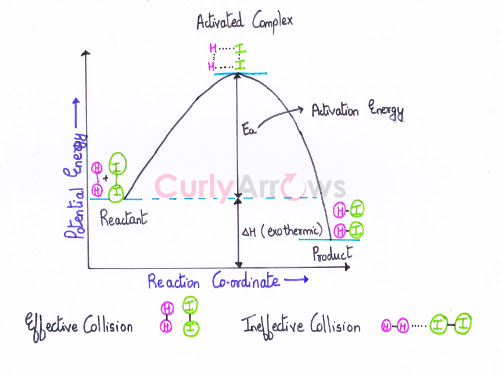
Activation Energy (Ea)

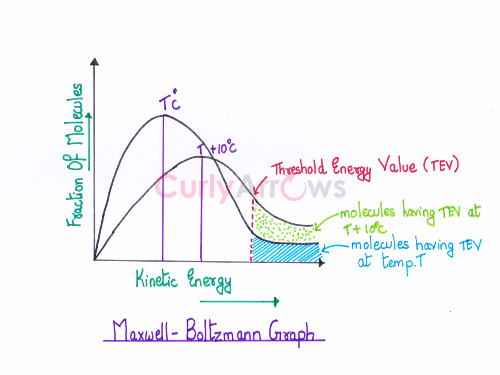
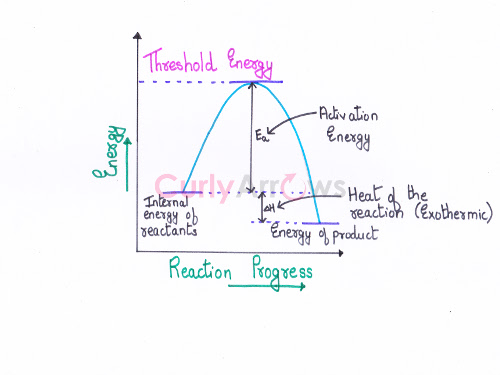
The activation energy (Ea) is the minimum amount of extra energy absorbed by the reactant molecules from an energy source such as heat, light, etc., to attain the threshold value for effective collisions to occur and thereby to form an intermediate complex (active state) that finally results in product formation.

Acyl

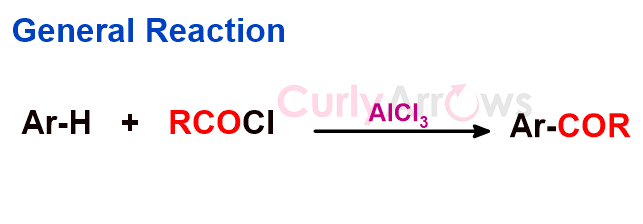
An acyl group is a general way of referring to an R’-C=O unit that forms the core of compounds like aldehydes, ketones, carboxylic acids, and acyl halides in modern organic chemistry.

This acyl group is easily identifiable with its carbon atom that is double-bonded to oxygen (C=O, carbonyl carbon) with one bond to an R’ group, which can be an alkyl or aryl group. 

Allyl

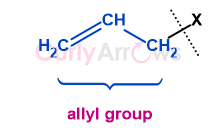
An allyl group is three-carbon substituted propene, also called a propenyl group (prop-2-en-1-yl).


What is an allyl group


It has a structural formula CH2=CH-CH2-X, where the X can be an alkyl/aryl group or a functional group.

Annealing

The process of heating a solid metal or glass to a specific high temperature and gradual cooling is called annealing. The physical property (strength, elasticity and crystalline property) of a solid can be altered by this method.


Atom

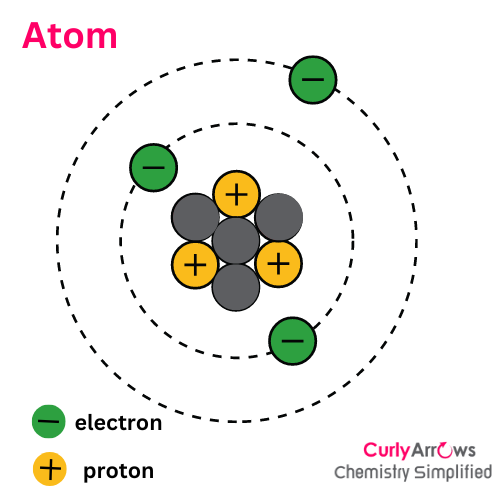
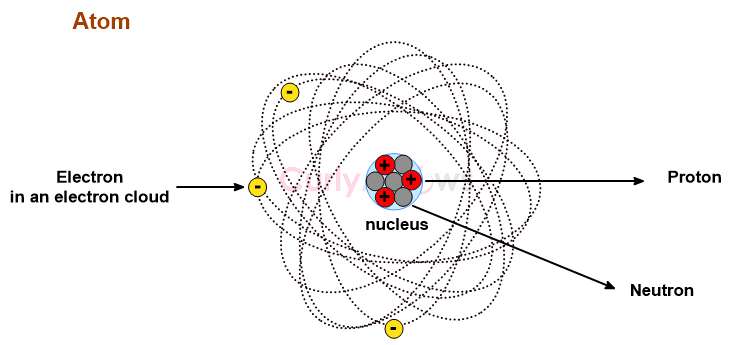
The matter is composed of invisible, indivisible, innumerable particles called atoms. Atoms are responsible for giving each matter its unique properties and identity. The uniqueness comes from the nature of the atom and its composition. Atoms are composed of three subatomic particles- electron, neutron, and proton. For example, an Oxygen atom has 8 electrons, 8 protons, and 8 neutrons.

Atomic Number

The Atomic number (symbol Z) uniquely identifies an element and is equal to the number of protons present in the nucleus of an atom.

For example, atomic number 6 identifies the Carbon atom with 6 protons in its nucleus. An uncharged Carbon atom will also have 6 electrons in the outer nuclear region, equal to its atomic number.

Benzyl

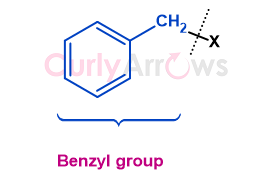
A benzyl, abbreviated as Bn, refers to the phenylmethyl group (C6H5-CH2-), consisting of a benzene ring attached to a methylene (-CH2-) group.


What is a benzyl?


Benzyne

Benzynes, also known as Arynes, are highly reactive intermediates formed in organic chemistry aromatic reactions. It is identified as containing a triple bond between two adjacent carbons of the benzene ring. One crucial difference separates Benzyne from Benzene...

Bond Angle

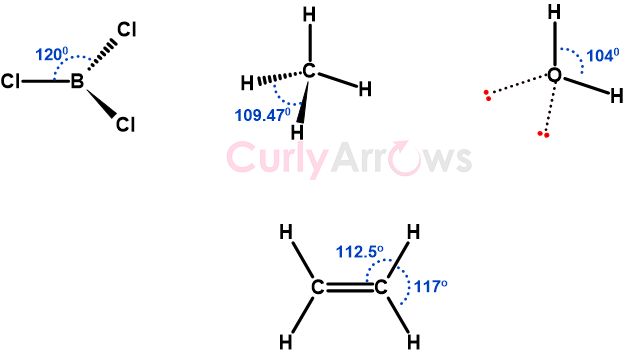
A bond angle is a geometrical angle between two bonds originating from the same central atom in a covalently bonded molecule, measured in degrees (o).
 

Bond angle definition


In other words, it is the angle between three atoms of which one is a central atom, and they are all held by covalent bonds.

Carbanion

A carbanion is a negatively charged, trivalent carbon ion that acts as a reactive intermediate in many organic reactions.

With three bonds and 8 electrons, carbanions are electron rich and act as a base forming a C-H bond or as a nucleophile forming a C-C bond.


Carbocation

A carbocation is a positively charged, trivalent carbon ion that acts as a reactive intermediate in many organic reactions.

With three bonds and only six electrons, carbocations have an incomplete octet and, therefore, electron deficient. It functions as an electron acceptor and an electrophile forming new Carbon-Carbon (C-C) bonds.


Central Atom

In molecules consisting of more than two atoms, the least electronegative atom (except Hydrogen) is the central atom. Due to its low electronegativity, the central atom will not hoard electrons but will share with other atoms, thereby forming a maximum number of bonds than the terminal atoms. So, the central atom is also the least numerous.  

Collision Frequency

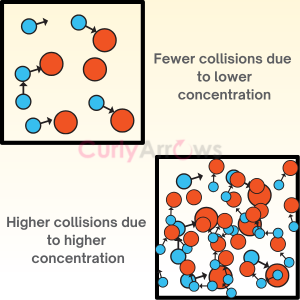
Collision Frequency in chemical kinetics is defined as the number of collisions that take place per second per unit volume of the reaction mixture between two reactant molecules considered as hard spheres. It is represented as Z.


Collision Theory

Collision theory is applicable only to bimolecular reactions mostly gases where the reactant molecules are considered as hard spheres that must collide with sufficient threshold energy and must be correctly oriented for the collision to be effective that results in the product formation.

The rate of the reaction, therefore, depends on the collision frequency, threshold energy, and the orientation (steric/probability) factor.

k= PZABe-Ea/RT

where,

Conformation

The different spatial arrangements organic molecules adopt due to the rotation of the single bond are called conformations. A specific conformation is called a conformer or conformational isomer

Many such conformational isomers are undoubtedly interconvertible by single bond rotations. So, these isomers are simply different rotational (or structural) arrangements of the same molecule.

Dialysis

Dialysis is a process of diffusion of the colloidal particles through a parchment or an animal membrane to remove excess of an electrolyte or any soluble impurities (crystalloids).


Definition of Dialysis Chemistry

Dihedral Angle

A dihedral angle is obtained when two planes pass through three atoms and two bonds, of which one bond is common to both planes. 

In the below example, plane 1 passes through X-C-C, containing three atoms and two bonds. Similarly, the plane 2 passes through C-C-Y. The separation between the two planes or the angle of intersection is denoted using a dihedral angle (ϴ) in degrees (o).


Dipole

The redistribution of electrons in an atom, bond, or molecule creates two ends (or poles), one electron-rich negative and the other electron-deficient positive; such an atom, bond, or molecule is said to have a dipole (two poles).


What is a dipole in chemistry


Effective Collisions

Effective collisions result in product formation due to an increase in the rate of a chemical reaction. It occurs when the two reactant molecules are correctly oriented and have attained the threshold value (or the activation energy value) at the time of the collision.


Electrochemical Series

In the electrochemical series, the electrodes are arranged in the increasing order of their reduction potential under standard conditions of 1M electrolyte concentration, 298 K temperature, and 1 bar atmospheric pressure.

It is also known as the activity series as the activities of two different electrodes towards displacement reaction are compared; whether the electrode under standard reaction condition will have reduction potential or oxidation potential.


Electrochemistry

A branch of chemistry that deals with the interconversion of chemical energy and electrical energy taking place via the redox reactions.  

It studies how a spontaneous redox reaction capable of generating chemical energy converts it into electrical energy. Example, Electrochemical cell. 

Or how the use of electrical energy can bring about a non-spontaneous chemical reaction. Example, Electrolytic cell.


Electrode Potential

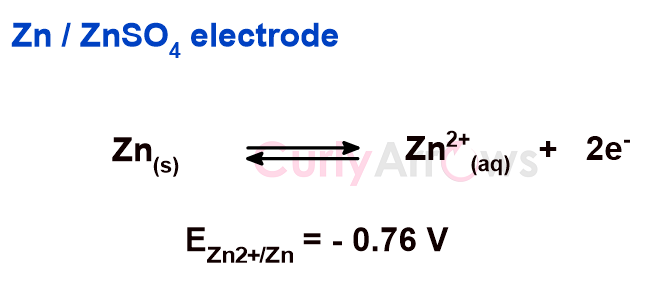
An electrode in contact with an electrolyte solution of same ionic nature (for example; Cu electrode in CuSO4 solution, Zn electrode in ZnSO4 solution) tends to either undergo oxidation or reduction due to which there develops a charge separation creating a potential difference. 


Electron

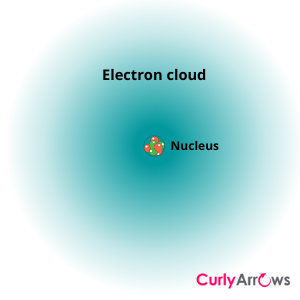
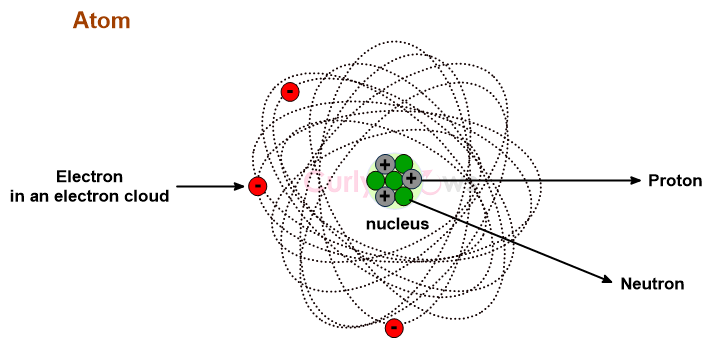
An electron is a negatively charged elementary particle that constitutes an atom, denoted as e- or β-. The electrons are present in the outer-nuclear region of an atom as clouds.


definition of electron in an atom with example


Electronegativity

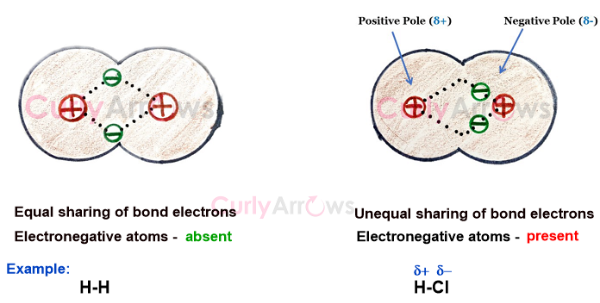
Electronegativity measures on a scale of 0.8 – 4 an atom’s or group of atoms’ tendency to attract the bond electron pair towards itself, thereby creating partial negative (δ-) and positive (δ+) terminals.


Definition of electronegativity


Electrophoresis

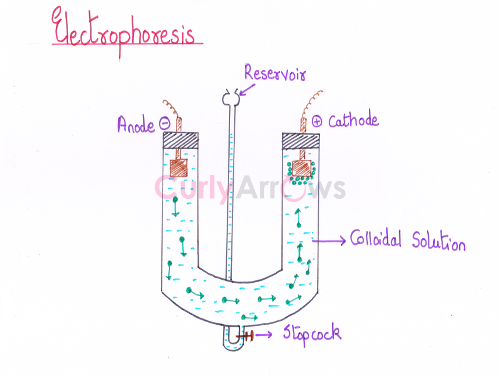
Depending on the nature of the charge (positive or negative) on the colloidal particles, its movement towards the electrode (cathode or anode) under the influence of an applied electric field is known as electrophoresis.


Electrophoresis proves the existence of charge on the colloidal particles and is used as a separation technique.

Groups

Groups in chemistry refer to the arrangement of elements of the periodic table into vertical columns. These vertical columns, called groups, are numbered from 1 to 18 and run from top to bottom. The first column on the left is labelled Group 1, and the last column on the right is labelled Group 18. 

The elements in the group have the same number of electrons (valence electrons) in their outermost shell, also known as the valence shell, due to which they all have the same chemical or physical properties.

Heteroatomic molecules

When atoms of different types combine to form molecules, it is a heteroatomic molecule. For example, when Carbon (C) and Oxygen (O) atoms combine under an appropriate reaction condition, it can lead to the formation of two types of products (carbon monoxide, CO, and carbon dioxide, CO2) containing two types of atoms.

A heteroatomic molecule can be diatomic (like hydrogen chloride, HCl), triatomic (like water, H2O), or polyatomic (like methane, CH4). 

Heterolytic Cleavage

Heterolytic cleavage or heterolysis is a chemical reaction in which the bond between two atoms breaks unequally so that the two bond electrons reside with only one atom.

The atom that receives both electrons become an electron-rich negatively charged ion (anion, denoted with a negative sign), and the atom that lost the electrons forms a positively charged ion (cation, denoted with a positive sign).

Homoatomic molecules

When the atoms combining to form molecules are of the same type, it is a homoatomic molecule. For example, when two Hydrogen atoms (2H) combine under an appropriate reaction condition, a Hydrogen molecule (H2) is formed.

A homoatomic molecule can be diatomic (like elemental hydrogen, H2), triatomic (like ozone, O3), or polyatomic (like sulphur allotrope, S8). 

Homolytic Cleavage

Homolytic cleavage, or homolysis, is a chemical reaction in which a covalent bond between two atoms is broken equally, and each atom retains one of the two electrons that form the bond. This creates two species (similar or dissimilar), each with an unpaired electron, known as the radicals. The radical electron is denoted with a dot (.) over the atoms’ symbol.

Hydrogen Bonding

Hydrogen bonding is an attractive intermolecular interaction stronger than Vander Waals forces that exclusively occurs when the Hydrogen atom is sandwiched between two highly electronegative atoms N, O, or F, one to which it is covalently bonded and the other it attracts electrostatically.


Inductive Effect

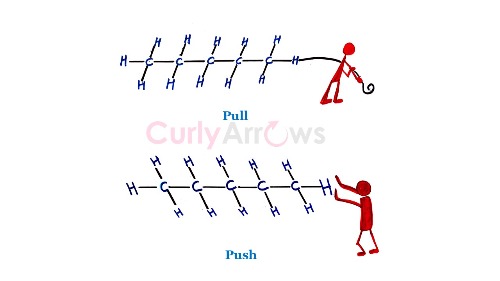
An atom or group of atoms that can pull the bond electrons towards itself or push the bond electrons from itself and decreasingly transmit the effect along the sigma (σ) bonds of the carbon chain inducing permanent polarization in the molecule. Such an effect is called the Inductive effect.


Intermolecular Forces

Intermolecular forces are collective forces in organic chemistry that cause atoms and molecules to stick together and interact; therefore, they are electrostatic in nature. The collective strength of these electrostatic interactions can affect a compound's physical properties, like melting and boiling points, density, refractive index, solubility, and others.

Almost all atoms and molecules interact through intermolecular forces, an inherent property resulting from the presence of electrons. 

Intrinsic Colloid

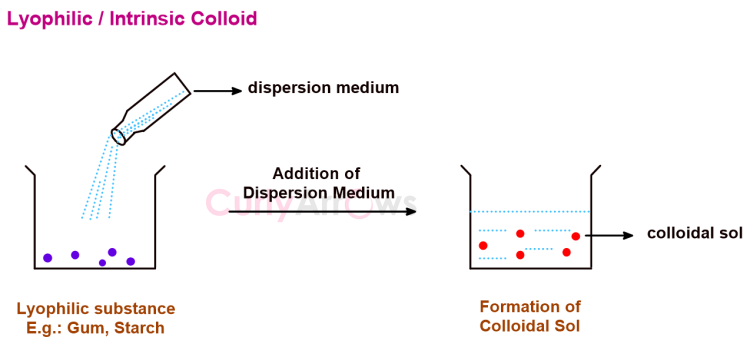
Few substances like gum, starch, gelatin, rubber have an inherent or a natural tendency to form colloidal sol on direct mixing with a suitable dispersion medium and are called intrinsic colloids. As they are solvent loving, they are also known as lyophilic colloids.


Ion

Ion is different from an atom since an atom is an electrically neutral specie with an equal number of positive protons and negative electrons.


How atom is different from ion


Isomers and Isomerism

Isomers are molecules with the same molecular formula; that is, they have the same atoms in exact numbers (or the same molar masses); however, they still differ in their structures.  

These differences or structural variations arise due to the atom’s attachment styles. 

An atom may connect differently, each time having different set of neighbors by bond or in space. 

Isotope

Isotopes are a group of atoms belonging to an element with the same atomic number but a different mass number. Such a group of atoms have the same number of protons in their nuclei but differ only in the number of neutrons.

For example, the Oxygen atom has three isotopes – 16O, 17O, and 18O. All three isotopes have 8 protons; however, the number of neutrons is 8 in 16O, 9 in 17O, and 10 in 18O.

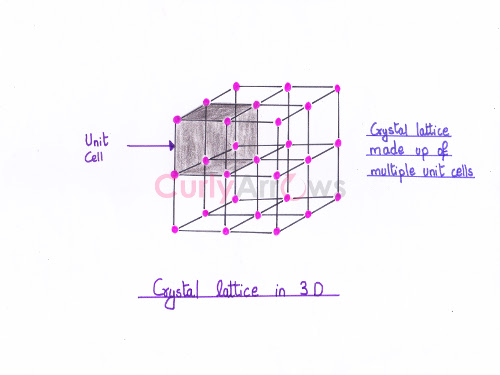
Lattice Point

A Lattice point is the position in the unit cell or in a crystal where the probability of finding an atom or an ion is the highest. In other words, the atoms or ions occupy the lattice points in a crystalline solid. 


Lewis Structures

Of all the electrons that form part of an atom, the valence electrons are the only ones that participate when atoms combine to form a bond. In ionic bonding, electrons are transferred (either lost or gained), whereas in covalent bonding, two electrons are shared between the two atoms. Double or triple bonds are formed when atoms share more than one electron pair. The atoms do so to attain the stable octet configuration of 8 electrons in their valence shell.

London Dispersion Force

London Dispersion, a type of Vander Waal Force, is the weakest of the three types, yet, it is the only one universally present in all the atoms and molecules.

In most cases, it is present in addition to the other forces; however, it is exclusively observed in nonpolar atoms and molecules devoid of any functional groups and, therefore, possess no other overpowering interactions. Examples are He, CH4, I2, C(CH3)4, etc.

Lone pair

Lone pair is a set of electrons present in an atom’s valence shell that did not participate in a covalent bond formation reaction; therefore, they are also called the non-bonding electrons.

While drawing the molecules’ structure, the lone pair electrons on shown as dots (..) above the atom.


Lucas Reagent

An equimolar (1:1) mixture of a Lewis acid anhydrous ZnCl2 and concentrated HCl- Lucas Reagent, is used to identify and classify unknown alcohol (R-OH) as primary (1o), secondary (2o) or tertiary (3o). The Lucas test is based on the speed at which corresponding insoluble alkyl chlorides (R-Cl) are formed post reaction. The formation of alkyl chlorides solution appears as cloudiness/emulsion, and it is correlated with the reactivity of the alcohol, 3o alcohol being the most and 1o being the least.


Lyophilic Colloids

The substances that on mixing with a suitable dispersion medium readily form a colloidal sol are called lyophilic (solvent loving) and the sols thus formed are known as the lyophilic sols.


Example, Gum, Starch, Gelatin, Rubber.

Markovnikov’s Rule

Russian chemist Vladimir Markovnikov proposed Markovnikov’s rule in 1869 to predict the regiochemistry of addition reactions between unsymmetrical alkenes/ alkynes and hydrogen halides to form alkyl halides.

According to the rule, ‘An alkyl halide is formed in a reaction between an unsymmetrical alkene or alkyne and hydrogen halide (HX) when the negative part of the reagent (X-) attaches to the alkene carbon that has fewer number of hydrogen atoms across the double bond.’

Mass Number

The mass number is the total count of the number of protons and neutrons present in the nucleus of an atom, denoted as A.

For example, 12C has 6 protons and 6 neutrons; its mass number is 12.

A mass number is always a whole number. The mass number is also known as the atomic mass number or nucleon number.

Melting Point

The melting point of a substance is the temperature at which a  solid, ordered crystalline substance is in equilibrium with a more random liquid state, thereby undergoing a phase change.

Since the components of the solid substances are bound by strong intermolecular attractive forces, it also reflects the energy needed to weaken these attractive forces and move freely in the liquid state. 


Meta Directors

The meta directors are a class of atoms or a group of atoms that, when attached to an aromatic ring, render it with the ability to direct an incoming electrophile to its meta (third or fifth) position in an electrophile aromatic substitution reaction.


Metallic Bond

A metallic solid is made of many metal atoms composed of kernels and electrons, the positive kernels held in arrays while the negative electrons float around them, at the same time, attracted to each other due to their opposite electrostatic nature and engaged in bonding known as the metallic bond.

Methylene – Species and Group

As a reactive species, a methylene refers to an electron-deficient carbene, represented as :CH2

Carbenes are carbon-containing electrophiles that contain only 6 valence electrons instead of the standard eight required for stability. It has an unshared electron pair and two bonds, making it a divalent species, highly unstable, having a fleeting existence. Though classified as electrophiles, methylene species have no formal charge and are neutral.


Molecular Formula

A molecular formula expresses in positive whole numbers the total count of each atom in a molecule. 

For example, in the molecular formula of H2O, the total count of Hydrogen atoms is 2, and that of Oxygen atoms is 1. Another example of a complex molecule, such as glucose, expressed in a molecular formula as C6H12O6, has a total of 6 carbon and oxygen atoms, and 12 hydrogen atoms.

A molecular formula is always a multiple of the empirical formula, and their relationship is expressed as,

Molecule

A molecule is an electrically neutral chemical entity that consists of two or more bond atoms.

The joining of two or more atoms by a linkage known as a covalent bond creates molecules such that changing the connection, or the arrangement will change the molecule and its properties. 

Multimolecular Colloids

On the dissolution of a substance in a dispersion medium, the aggregation of a vast number of atoms or smaller molecules of varying sizes (< 10-9 m) leads to the formation of colloidal particles of the size range 10-9 to 10-6 m.

As the colloidal particles are now made up of many atoms or molecules, it is now called multimolecular colloids.


Newman Projection

Newman Projection is a way of representing the spatial relationship of groups attached to two adjacent carbon atoms in a molecule. The angle at which the observer makes this observation occurs when they try to visualize the molecule head-on along the bond axis joining the two atoms, such that one carbon atom is seen as a front and the other as a rear.

Nucleophiles

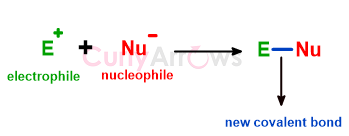
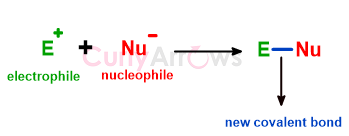
Nucleophiles are an atom or a group of atoms that are richer by two electrons and donate these electrons to electron-deficient species, the electrophiles.

Donating the electrons from the nucleophile to the electrophile creates a new two-electron covalent bond.


Nucleus of an atom

An atom has a central, dense, tightly packed nucleus with a diameter of 10-15 m compared to an atom at 10-10 m, a size equivalent to a marble in a football stadium. Therefore, the nucleus makes up less than 0.01 % of the atom's volume.

The nucleus contains positively charged protons and neutral neutrons as subatomic particles bound firmly by the nuclear force.

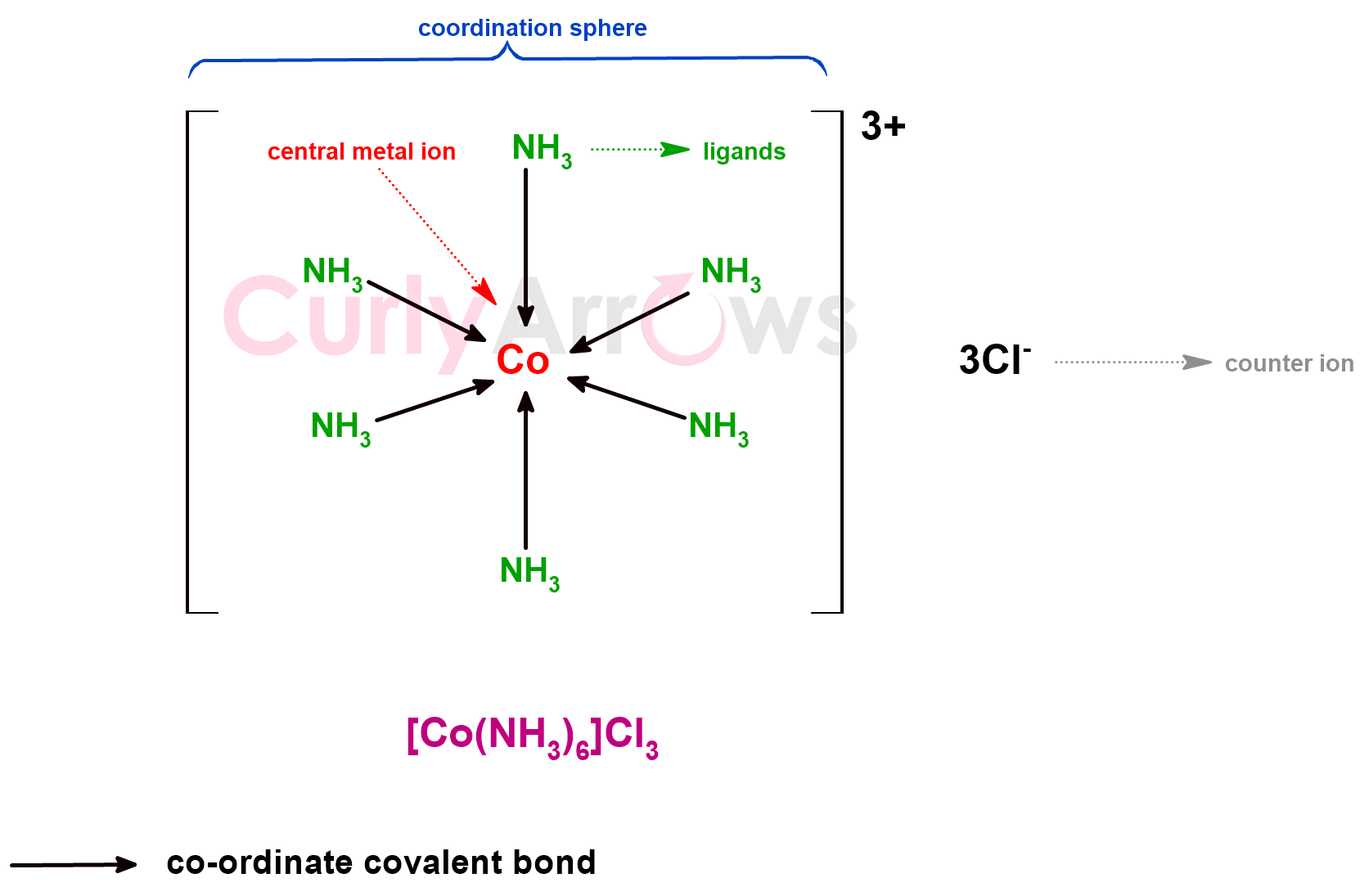
Octahedral Geometry

When an atom is surrounded by six substituents, arranged in a manner that four are in one plane, one above and below, and their vertices join to give eight faces (octa-hedrons), such a molecular geometry is octahedral.

Since it looks like two pyramids projecting out from a square base, the geometry is also called square bipyramidal.


Octet Rule

Atoms generally form bonding arrangements that give them filled shells of electrons like a noble gas configuration. The stability the atom aims for is that of its nearest noble gas.

For example, Lithium (Z = 3, Electronic Configuration = 1s2, 2s1) of the second row would prefer losing one electron to become Li+ (Z = 3, Electronic Configuration = 1s2) having an electronic arrangement similar to its nearest noble gas Helium (Z = 2, Electronic Configuration = 1s2). 

Organic Chemistry

Organic chemistry is a branch of chemistry that studies transformations at three levels- macroscopic (visual changes like rotting of an apple), microscopic (atoms, elements, electrons, involved), and symbolic (representing changes using bond breaking and making, electron transfer arrows). It, therefore, studies structures, composition, properties, formation, and reactions of various compounds, mainly carbon-containing compounds, to fully understand transformations.


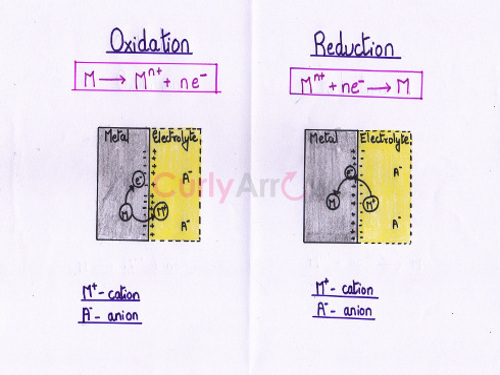
Oxidation

Oxidation Reaction according to the Classical Concept

Oxidation is Defined as, the addition of Oxygen or any other electronegative element to a substance.

Example,

2Mg(s) + O2(g) → 2MgO (addition of oxygen)

Mg(s) + Cl2(g) → MgCl2 (addition of electronegative element, chlorine)

Or

As the removal of Hydrogen or any other electropositive element from a substance.

Example,

Oxidation Potential

For an electrode in contact with an electrolyte solution having similar ionic nature, if the tendency of the electrode is to lose electrons and undergo oxidation reaction, the electrode is said to have an oxidation potential. Example, Zn electrode dipped in the ZnSO4 electrolyte solution. 


Peptization

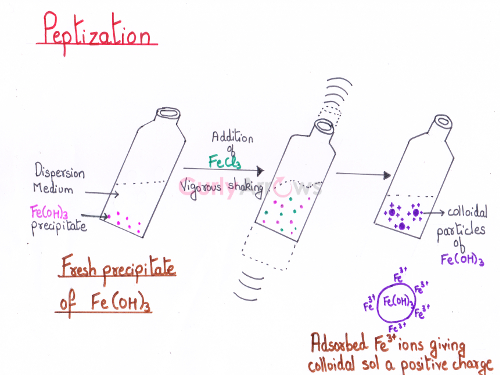
The process of transforming a freshly prepared precipitate to a colloidal sol by shaking it with a small amount of electrolyte having an ion common to the precipitate, in a dispersion medium is known as the peptization, and the electrolyte used for such a purpose is called the peptization agent.


Periods

Periods in chemistry refer to the horizontal rows of elements in the periodic table, which represent all 118 elements across 7 rows. 

The periods run from left to right, with each consecutive element increasing in atomic number by 1.  

Periods 1, 2, and 3 have 2, 8, and 8 elements, whereas periods 4, 5, 6, and 7 have 18, 18, 32, and 32 elements.


Permanent Dipole

A permanent dipole is an inherent feature of the molecule due to the nature of the participating atoms forming the two-electron covalent bond.

Some atoms withdraw more of the bond electrons towards themselves, increasing their electron density and leaving the other end electron deficient. This unequal electron charge distribution creates positive and negative poles (denoted with δ+, δ- signs), causing the molecule to have permanent poles or a dipole.


Physical Properties

Physical properties identify the substance's unique nature by subjecting the substance to qualitative and quantitative measurements. In these experiments, the substance does not undergo destruction or reconstitution of its composition but can change states/phases. 

Pi bond

Once the sigma bonds are formed, any additional electrons in the perpendicular unhybridized p-atomic orbitals engage in side-to-side or lateral overlap to form an additional bond known as the pi bond. The symbol π denotes the pi bond, drawn as an additional line over the sigma bond in the molecular structure.

Proton

A proton is one of the subatomic particles found in every atom’s nucleus, denoted as p or p+.


simplest Definition of proton with example


A proton has a positive charge of +1 and a mass of 1 AMU.

Reduction (Chemistry)

Reduction Reaction according to the Classical Concept 

Reduction is defined as, the elimination of oxygen or any electronegative element from a substance.

Example,

CuO(s) + H2(g) → Cu(s) + H2O(l) (removal of oxygen)

2FeCl3(aq) + H2(g) → 2FeCl2(aq) + 2HCl(aq) (removal of electronegative element, chlorine)

Or

Reduction Potential

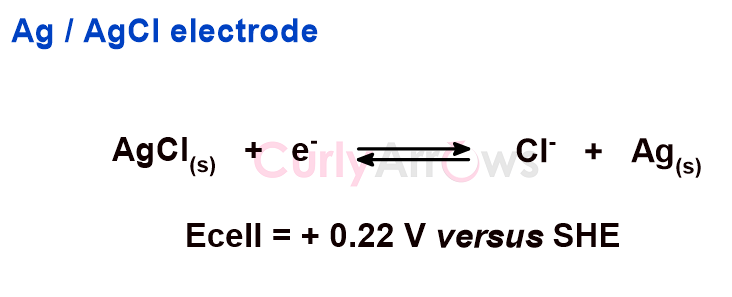
For an electrode in contact with an electrolyte solution having similar ionic nature, if the tendency of the electrode is to gain electrons and undergo reduction, the electrode is said to have a reduction potential. 

Example, Ag electrode dipped in the AgCl electrolyte solution.


Resonance

Resonance theory explains various observed properties in a molecule using the electron delocalization concept and multiple Lewis structures, which a single Lewis structure cannot.

A single Lewis structure can only describe some but not all of a molecule's observed properties. Resonance theory is helpful in molecules that can be expressed using several Lewis structures, like Benzene or CO2

Sawhorse Projection

It is a way of visualizing the carbon atoms of an open-chain organic molecule from an oblique angle and projecting that image on a 2-dimensional paper to appear like a carpenter’s sawhorse. 

The two adjacent carbons of interest in a chain are drawn as a slant line, and its two groups form the hind and forelegs, with the third forming the head and the tail to resemble a horse from which the name draws an inspiration.


Short Range Order

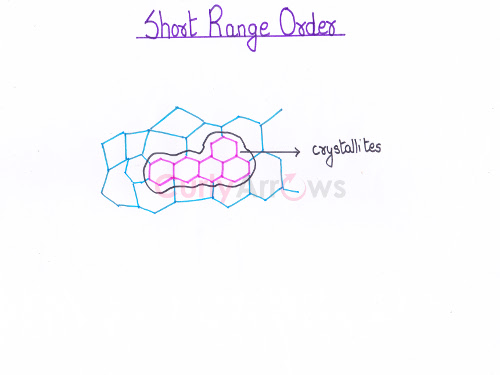
The regular periodic arrangement of the constituent particles at the lattice points of the unit cell is observed only in a short region. Most liquids and amorphous solids show short range order. 


Sigma Bond

The single covalent bond is referred to as a sigma bond, denoted by the symbol σ.

The sigma bonds are usually mentioned in valence bond theory to visualize the bond formation between atoms to form polyatomic molecules like H2, CH4, etc., by overlapping their atomic orbitals.

Single Covalent Bond

When two atoms come closer by attraction and overcome their repulsive interactions until they find a balance, at which point, the atoms contribute one valence electron each to form a stable, single covalent bond. So, the single covalent bond is a two-electron bond

It is also known as the sigma bond and is denoted as a dash (-) between the two atoms. 

sp3 Carbon

A sp3 hybridized carbon is a tetravalent carbon that forms four single covalent bonds with itself or atoms of other p-block elements to its right, namely Oxygen, Carbon, Nitrogen, and Halogens. It also forms a bond with elements capable of forming covalent bonds, such as hydrogen. 

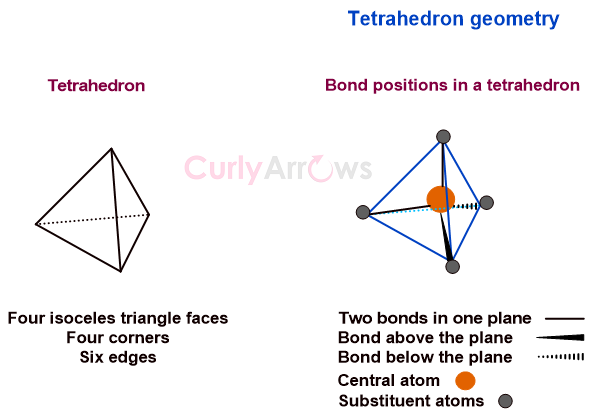
The bonds formed are of equal strength and at an angle of 109.5o due to which the central carbon atom is tetrahedral in shape. Example, carbon of an alkane or an alkyl group.


Space lattice

The regular, periodic arrangement of atoms, ions or molecules at the lattice points of a crystal in a three-dimensional space is called the space lattice or the crystal lattice. 


Stereoisomers

Stereoisomers are molecules that have the same molecular formula and bonding arrangement; however, they differ in how their atoms are positioned in 3-dimensional space (spatial orientation) with respect to each other.

These molecules, which differ in orientation while still having the same molecular formula, are also known as spatial isomers.


Structural Formulas

Structural formulas are used to display covalently bonded molecules in the order they are bonded. The atoms may bond using single, double, or triple bonds. Some structural formulas show only the atoms without displaying the complete structure with bond angles and, in some cases, even the bonds.

Structural Isomers

Structural isomers have the same molecular formula but differ in how the atoms are bonded to each other; that is, their attachment style is different.

Such molecules that differ by bonds while still having the same molecular formula are also known as constitutional isomers.


Threshold Energy

Threshold energy is the minimum kinetic energy the molecules must have to bring about effective collisions between two reactant molecules considered as hard spheres, resulting in a chemical reaction.

Therefore,

Threshold energy= Average of the initial kinetic energy possessed by the reactants + Activation energy (Ea)


Unified atomic mass unit

The unit used to describe the mass of an atom is the unified atomic mass unit, symbolized as amu or μ.  

The standard used for measuring the mass of an atom is a 12C atom. Carbon-12 (12C) is an isotope of Carbon with 6 protons, 6 neutrons, and 6 electrons.

The unified atomic mass unit is defined as exactly 1/12 th the mass of one Carbon-12 atom.

Valence Electrons

The outermost electrons of an atom that are mostly involved in bonding reactions are called valence electrons. These electrons are farthest from the nucleus and have high energy.

For example, the total number of electrons in Lithium is three distributed in two energy levels, closest to farthest from the nucleus- 1s2 2s1.


Vander Waal Forces

Vander Waals is an attractive universal force that operates when the atoms and molecules are within a distance range of 0.4- 0.6 nm.

The attractive force closely gathers the atoms and molecules, so their collective strength can affect the state and other physical properties like melting and boiling points, viscosity, etc.

Ylide

The ylide is an electrically neutral molecule that has a negative carbon with an unshared electron pair (usually a carbanion) adjacent to a positive heteroatom (typically nitrogen, phosphorus, or sulfur), where both the atoms have full octets (eight electrons in their valence shell). 

The bond between the carbanion and positive heteroatom is best described as a polar covalent bond with significant ionic and double-bond character, depending on the ylide type.


Zaitsev’s Rule

A rule stating that an elimination reaction will give as the major product the most stable alkene, that is, the alkene with the most highly substituted double bond.

For example, dehydrohalogenation of alkyl halide 2-Bromo-2-methylbutane can proceed in two ways to give two types of alkenes, of which only one is a major product.