
A

Acyl

An acyl group is a general way of referring to an R’-C=O unit that forms the core of compounds like aldehydes, ketones, carboxylic acids, and acyl halides in modern organic chemistry.

This acyl group is easily identifiable with its carbon atom that is double-bonded to oxygen (C=O, carbonyl carbon) with one bond to an R’ group, which can be an alkyl or aryl group. 
Acid

Commonly, it is accepted that a compound is an Arrhenius acid if it liberates hydrogen ions as H+ in water. In the next step, these H+ ions combine with water molecules to form hydronium ions (H3O+). The two steps can be summarised to say that Arrhenius acids are compounds that form hydronium ions, provided water is the solvent.


Allyl

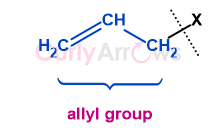
An allyl group is three-carbon substituted propene, also called a propenyl group (prop-2-en-1-yl).


What is an allyl group


Atom

The matter is composed of invisible, indivisible, innumerable particles called atoms. Atoms are responsible for giving each matter its unique properties and identity. The uniqueness comes from the nature of the atom and its composition. Atoms are composed of three subatomic particles- electron, neutron, and proton. For example, an Oxygen atom has 8 electrons, 8 protons, and 8 neutrons.

Atomic Number

The Atomic number (symbol Z) uniquely identifies an element and is equal to the number of protons present in the nucleus of an atom.

For example, atomic number 6 identifies the Carbon atom with 6 protons in its nucleus. An uncharged Carbon atom will also have 6 electrons in the outer nuclear region, equal to its atomic number.

Activation Energy (Ea)

The activation energy (Ea) is the minimum amount of extra energy absorbed by the reactant molecules from an energy source such as heat, light, etc., to attain the threshold value for effective collisions to occur and thereby to form an intermediate complex (active state) that finally results in product formation.

Annealing

The process of heating a solid metal or glass to a specific high temperature and gradual cooling is called annealing. The physical property (strength, elasticity and crystalline property) of a solid can be altered by this method.