Organic Chemistry

Molecule

A molecule is an electrically neutral chemical entity that consists of two or more bond atoms.

The joining of two or more atoms by a linkage known as a covalent bond creates molecules such that changing the connection, or the arrangement will change the molecule and its properties. 

Homoatomic molecules

When the atoms combining to form molecules are of the same type, it is a homoatomic molecule. For example, when two Hydrogen atoms (2H) combine under an appropriate reaction condition, a Hydrogen molecule (H2) is formed.

A homoatomic molecule can be diatomic (like elemental hydrogen, H2), triatomic (like ozone, O3), or polyatomic (like sulphur allotrope, S8). 

Why is Bi(V) a stronger oxidant/oxidizing agent than Sb (V)?

Bi (V) represents the +5-oxidation state of Bismuth (Bi). It means Bi has lost 5 electrons from its valence shell. Bi, therefore, wants to gain the lost electrons and is called an oxidizing agent. The process of electron uptake is a reduction reaction.

Bi (V) is a stronger oxidizing agent than Sb (V) and, therefore, will pick up the electrons faster than Sb (V). Due to the electron uptake, it will then go from a +5-oxidation state to a +3-oxidation state. Bi is now less by only three electrons due to the two-electron gain.

Allyl

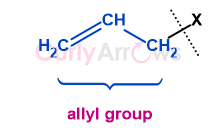
An allyl group is three-carbon substituted propene, also called a propenyl group (prop-2-en-1-yl).


What is an allyl group


What is the Strongest Bond in Chemistry?

A chemical bond strength is a force holding the atoms in a bond, and separating such atoms requires energy input. The bonds are of two types- Intermolecular and Intramolecular bonds.

Intramolecular bonds join the atoms in a molecule, whereas Intermolecular bonds are only responsible for closely associating the molecules. Therefore, Intramolecular bonds require higher energy to break than intermolecular bonds.