Conformation in Compounds with Lone Pair
Learning Objective: To understand the conformations molecules containing lone pair(s) mostly adopt.
Skill Level - Intermediate
Prerequisites:
Learning Objective: To understand the conformations molecules containing lone pair(s) mostly adopt.
Skill Level - Intermediate
Prerequisites:
Drugs are small molecular weight compounds (<500) that in moderate doses show a therapeutic (beneficial) effect and in high doses show harmful effects. They interact with the macromolecular targets (carbohydrates, proteins, fats and nucleic acid) to produce a biological response.
The condensed structural formula disguises the molecule's true vastness by revealing only the number of atoms present. What remains hidden from sight are the bond connections, the bond angles, and their three-dimensional arrangements, so what we observe is just the molecule's literal condensed form.
The longest carbon chain is the parent chain containing the principal functional group.
The principle functional group is always given the highest priority, lowest number (1 before 2, 3, 4...), and assigned as a suffix while writing the nomenclature. Therefore, the numbering of the parent chain always starts from the principal functional group.
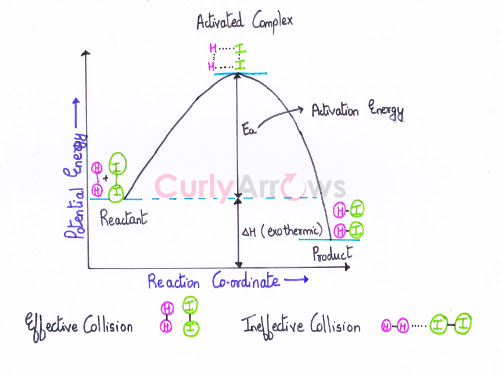
Effective collisions result in product formation due to an increase in the rate of a chemical reaction. It occurs when the two reactant molecules are correctly oriented and have attained the threshold value (or the activation energy value) at the time of the collision.
Molecular models are tools used for classroom or research to visualize better and interpret three-dimensional structures of organic molecules. The toolkit can be made of wood, plastic, metal, or other materials.
These models are digitally represented using computer graphics covered under molecular modelling, a branch of chemistry that uses computational and theoretical methods to model and mimic the molecule's behaviour in chemical and biological environments.
Learning Objective: To study how molecular weight, molecular shape, functional group, and carbon number impact density.
Skill Level - Intermediate
Prerequisites:
Common names of alkanes
Learning Objective: To learn about the nature of the electron, an atom's reactive component. The article also helps to understand why the elctrons behave differently as a sub-atomic particle with its dual wave-particle behaviour, ushering in a new field of quantum mechanics.
Skill Level – Intermediate
Prerequisites: