Organic Chemistry

Are ions a type of atom?

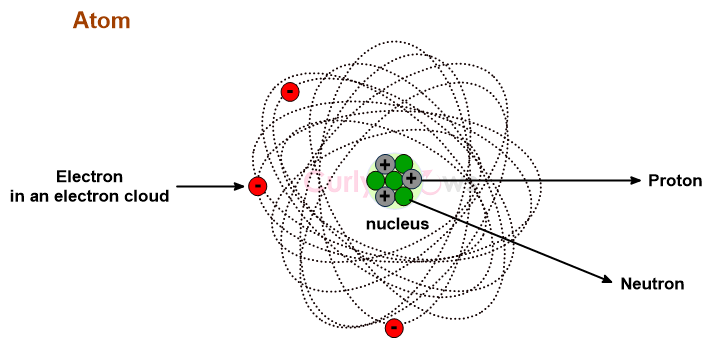
Atom, the omnipresent particle that builds the universe, hides its identity in a tiny, sub-atomic particle- the proton, where the proton number decides the type of the atom. However, an outer-nuclear component- the electrons- determines an atom's reactivity.

In nuclear reactions, the proton number can change so that the atom's identity also changes. However, in organic chemical reactions, only the electron count changes without affecting an atom's identity. 

Metallic Bond

Pre-requisite: Nuclear charge, Valence electrons

Stovetop cooking routinely requires cast iron or aluminium pans but never a glass pan or a pan made of silicon. That’s because the glass pan will shatter at high temperatures, and the silicon pan will burn away.

Electrode Potential

An electrode in contact with an electrolyte solution of same ionic nature (for example; Cu electrode in CuSO4 solution, Zn electrode in ZnSO4 solution) tends to either undergo oxidation or reduction due to which there develops a charge separation creating a potential difference. 


Groups

Groups in chemistry refer to the arrangement of elements of the periodic table into vertical columns. These vertical columns, called groups, are numbered from 1 to 18 and run from top to bottom. The first column on the left is labelled Group 1, and the last column on the right is labelled Group 18. 

The elements in the group have the same number of electrons (valence electrons) in their outermost shell, also known as the valence shell, due to which they all have the same chemical or physical properties.