Podcast - Difference between Ionic, Covalent, Metallic, and Vander Waal Forces | CurlyArrows
Episode Length
4:08
Episode Number
7
Learning Objective: To determine the factors responsible for the stability of a leaving group. These factors decide whether the leaving group is good or bad.
Benzyne | Benzyl | |
|---|---|---|
Identification | Benzyne is identified as a triple bond between two adjacent carbon atoms in a benzene ring. Root- Benzyne (like the triple bond of alkyne) |
A type of electrophilic aromatic substitution reaction to introduce an acyl group (R-C=O) in the aromatic ring resulting in aryl ketones (Ar-COR). The reacting species are usually but not always -benzene (substituted or unsubstituted), an acyl halide and a Lewis Acid catalyst like AlCl3.
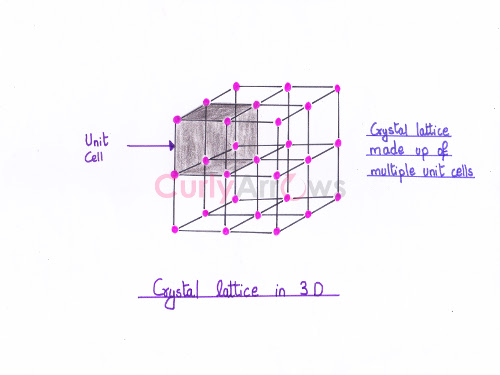
The regular, periodic arrangement of atoms, ions or molecules at the lattice points of a crystal in a three-dimensional space is called the space lattice or the crystal lattice.
Learning Objective: To learn about the size and composition of an atom.
Skill Level – Intermediate
Prerequisites:
Units of measurement in chemistry, mainly for length
A carbocation is a positively charged, trivalent carbon ion that acts as a reactive intermediate in many organic reactions.
With three bonds and only six electrons, carbocations have an incomplete octet and, therefore, electron deficient. It functions as an electron acceptor and an electrophile forming new Carbon-Carbon (C-C) bonds.
Learning Objective: To study the behavior of pi bonds containing nucleophiles seen in organic chemistry reactions.
Prerequisites:
Intermolecular forces are responsible for holding various molecules and ions close to each other. Their attractive strength is significant enough to affect various physical, chemical, and biological properties.