Organic Chemistry

Nucleophiles

Nucleophiles are an atom or a group of atoms that are richer by two electrons and donate these electrons to electron-deficient species, the electrophiles.

Donating the electrons from the nucleophile to the electrophile creates a new two-electron covalent bond.


What is the priority order in polyfunctional compounds while assigning nomenclature?

IUPAC, an international body engaged in developing standards for naming chemical elements and compounds, has laid several rules known as 'IUPAC rules' to identify a molecule by its parent alkane chain and the functional group. It has assigned various suffixes to identify organic chemistry's commonly seen functional groups.

Valence Electrons

The outermost electrons of an atom that are mostly involved in bonding reactions are called valence electrons. These electrons are farthest from the nucleus and have high energy.

For example, the total number of electrons in Lithium is three distributed in two energy levels, closest to farthest from the nucleus- 1s2 2s1.


Organic Chemistry Fundamentals - Topic List | CurlyArrows

Organic Chemistry stands out from other scientific disciplines due to its unique focus on carbon. This versatile element forms larger, more diverse molecules, and its reactions with other elements are crucial for enhancing reactivity, improving properties, introducing structural diversity, altering molecular composition, and more. These ambitious transformations are powered by electrons. Therefore, the study of organic chemistry begins with a deep understanding of its key players-carbon and electrons.

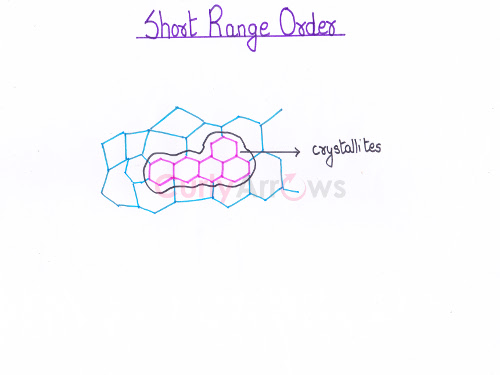
Short Range Order

The regular periodic arrangement of the constituent particles at the lattice points of the unit cell is observed only in a short region. Most liquids and amorphous solids show short range order.