Organic Chemistry

Stereoisomers

Stereoisomers are molecules that have the same molecular formula and bonding arrangement; however, they differ in how their atoms are positioned in 3-dimensional space (spatial orientation) with respect to each other.

These molecules, which differ in orientation while still having the same molecular formula, are also known as spatial isomers.
 

Valence Electrons

The outermost electrons of an atom that are mostly involved in bonding reactions are called valence electrons. These electrons are farthest from the nucleus and have high energy.

For example, the total number of electrons in Lithium is three distributed in two energy levels, closest to farthest from the nucleus- 1s2 2s1.


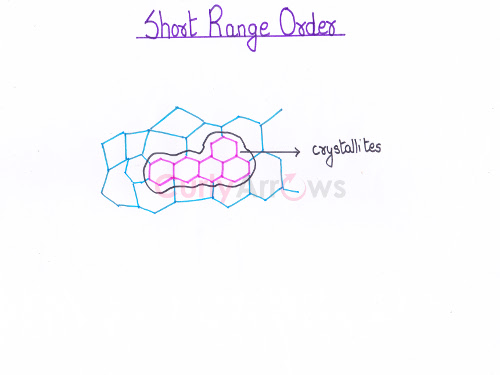
Short Range Order

The regular periodic arrangement of the constituent particles at the lattice points of the unit cell is observed only in a short region. Most liquids and amorphous solids show short range order. 


Resonance

Resonance theory explains various observed properties in a molecule using the electron delocalization concept and multiple Lewis structures, which a single Lewis structure cannot.

A single Lewis structure can only describe some but not all of a molecule's observed properties. Resonance theory is helpful in molecules that can be expressed using several Lewis structures, like Benzene or CO2

Reduction Potential

For an electrode in contact with an electrolyte solution having similar ionic nature, if the tendency of the electrode is to gain electrons and undergo reduction, the electrode is said to have a reduction potential. 

Example, Ag electrode dipped in the AgCl electrolyte solution.


How do nonpolar molecules interact?

A nonpolar molecule is made of two or more atoms where the electronegativity difference between the atoms is less than 0.5. Therefore, the electron density in the bond is equally distributed, and there is no concentration of electrons on one atom to create a charge separation rendering the molecule essentially without poles or nonpolar. Such nonpolar molecules like H2, CH4, He, etc., will interact using the London dispersion forces without forming any positive or negative pole.