Organic Chemistry

What are Radical inhibitors and their role in a reaction?

A radical reaction usually happens in three steps- Initiation (creation of free radicals), Propagation (multiplication and growth of radical reaction), and Termination (stopping of the free radical reaction).

Radical inhibitors are chemical species that inhibit radical reactions by halting the chain propagation step.

Examples of such inhibitors are Hydroquinone, BHT (2,6-di-t-butyl-4-methylphenol), etc.

What are s-block elements?

If all the elements were to create a gated community for themselves; they would build four apartment blocks namely, the s-block, p-block, d-block and the f-block. The elements having similar property would be grouped together occupying one block and this behavior is based on the orbital the last electron chooses to enter.


Organic Chemistry Fundamentals - Topic List | CurlyArrows

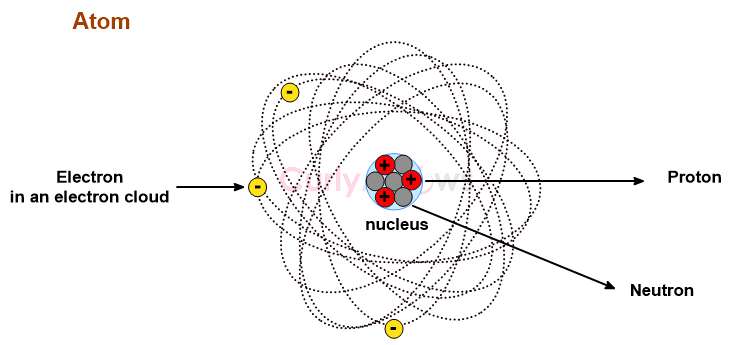
Organic Chemistry stands out from other scientific disciplines due to its unique focus on carbon. This versatile element forms larger, more diverse molecules, and its reactions with other elements are crucial for enhancing reactivity, improving properties, introducing structural diversity, altering molecular composition, and more. These ambitious transformations are powered by electrons. Therefore, the study of organic chemistry begins with a deep understanding of its key players-carbon and electrons.