Organic Chemistry

Groups

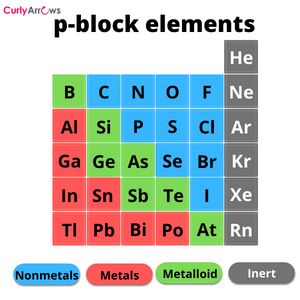
Groups in chemistry refer to the arrangement of elements of the periodic table into vertical columns. These vertical columns, called groups, are numbered from 1 to 18 and run from top to bottom. The first column on the left is labelled Group 1, and the last column on the right is labelled Group 18. 

The elements in the group have the same number of electrons (valence electrons) in their outermost shell, also known as the valence shell, due to which they all have the same chemical or physical properties.

How do Van der Waals forces arise?

Van der Waals forces are weak intermolecular attractive forces that occur in polar and nonpolar atoms or molecules due to the shift in their electron positions.

The electrons shift to form electron-dense and electron-deficient poles. Some poles are permanent due to the nature of the atom in a molecule, while others are induced poles. 

Central Atom

In molecules consisting of more than two atoms, the least electronegative atom (except Hydrogen) is the central atom. Due to its low electronegativity, the central atom will not hoard electrons but will share with other atoms, thereby forming a maximum number of bonds than the terminal atoms. So, the central atom is also the least numerous.  

Pi bond

Once the sigma bonds are formed, any additional electrons in the perpendicular unhybridized p-atomic orbitals engage in side-to-side or lateral overlap to form an additional bond known as the pi bond. The symbol π denotes the pi bond, drawn as an additional line over the sigma bond in the molecular structure.

Isotope

Isotopes are a group of atoms belonging to an element with the same atomic number but a different mass number. Such a group of atoms have the same number of protons in their nuclei but differ only in the number of neutrons.

For example, the Oxygen atom has three isotopes – 16O, 17O, and 18O. All three isotopes have 8 protons; however, the number of neutrons is 8 in 16O, 9 in 17O, and 10 in 18O.