Organic Chemistry Definitions A-Z

Intermolecular Forces

Intermolecular forces are collective forces in organic chemistry that cause atoms and molecules to stick together and interact; therefore, they are electrostatic in nature. The collective strength of these electrostatic interactions can affect a compound's physical properties, like melting and boiling points, density, refractive index, solubility, and others.

Almost all atoms and molecules interact through intermolecular forces, an inherent property resulting from the presence of electrons. 
Intrinsic Colloid

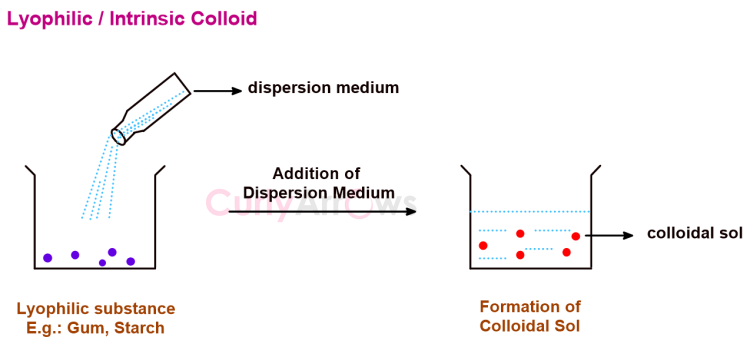
Few substances like gum, starch, gelatin, rubber have an inherent or a natural tendency to form colloidal sol on direct mixing with a suitable dispersion medium and are called intrinsic colloids. As they are solvent loving, they are also known as lyophilic colloids.


Ion

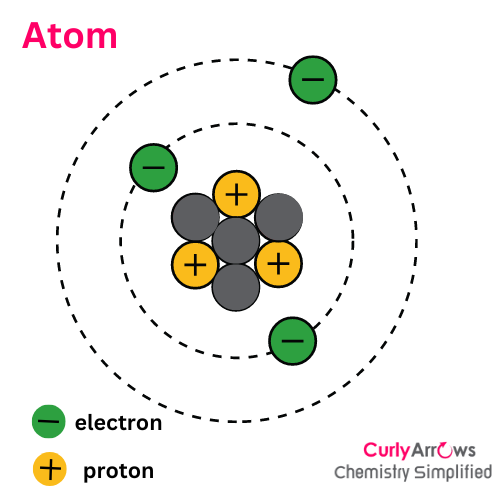
Ion is different from an atom since an atom is an electrically neutral specie with an equal number of positive protons and negative electrons.


How atom is different from ion


Isomers and Isomerism

Isomers are molecules with the same molecular formula; that is, they have the same atoms in exact numbers (or the same molar masses); however, they still differ in their structures.  

These differences or structural variations arise due to the atom’s attachment styles. 

An atom may connect differently, each time having different set of neighbors by bond or in space. 

Isotope

Isotopes are a group of atoms belonging to an element with the same atomic number but a different mass number. Such a group of atoms have the same number of protons in their nuclei but differ only in the number of neutrons.

For example, the Oxygen atom has three isotopes – 16O, 17O, and 18O. All three isotopes have 8 protons; however, the number of neutrons is 8 in 16O, 9 in 17O, and 10 in 18O.

Lattice Point

A Lattice point is the position in the unit cell or in a crystal where the probability of finding an atom or an ion is the highest. In other words, the atoms or ions occupy the lattice points in a crystalline solid. 


Lewis Structures

Of all the electrons that form part of an atom, the valence electrons are the only ones that participate when atoms combine to form a bond. In ionic bonding, electrons are transferred (either lost or gained), whereas in covalent bonding, two electrons are shared between the two atoms. Double or triple bonds are formed when atoms share more than one electron pair. The atoms do so to attain the stable octet configuration of 8 electrons in their valence shell.

London Dispersion Force

London Dispersion, a type of Vander Waal Force, is the weakest of the three types, yet, it is the only one universally present in all the atoms and molecules.

In most cases, it is present in addition to the other forces; however, it is exclusively observed in nonpolar atoms and molecules devoid of any functional groups and, therefore, possess no other overpowering interactions. Examples are He, CH4, I2, C(CH3)4, etc.

Lone pair

Lone pair is a set of electrons present in an atom’s valence shell that did not participate in a covalent bond formation reaction; therefore, they are also called the non-bonding electrons.

While drawing the molecules’ structure, the lone pair electrons on shown as dots (..) above the atom.