
Organic Chemistry Definitions A-Z

Reduction Potential

For an electrode in contact with an electrolyte solution having similar ionic nature, if the tendency of the electrode is to gain electrons and undergo reduction, the electrode is said to have a reduction potential. 

Example, Ag electrode dipped in the AgCl electrolyte solution.
 

Resonance

Resonance theory explains various observed properties in a molecule using the electron delocalization concept and multiple Lewis structures, which a single Lewis structure cannot.

A single Lewis structure can only describe some but not all of a molecule's observed properties. Resonance theory is helpful in molecules that can be expressed using several Lewis structures, like Benzene or CO2

Sawhorse Projection

It is a way of visualizing the carbon atoms of an open-chain organic molecule from an oblique angle and projecting that image on a 2-dimensional paper to appear like a carpenter’s sawhorse. 

The two adjacent carbons of interest in a chain are drawn as a slant line, and its two groups form the hind and forelegs, with the third forming the head and the tail to resemble a horse from which the name draws an inspiration.


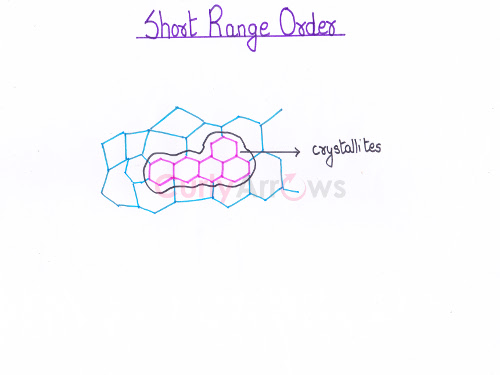
Short Range Order

The regular periodic arrangement of the constituent particles at the lattice points of the unit cell is observed only in a short region. Most liquids and amorphous solids show short range order. 


Sigma Bond

The single covalent bond is referred to as a sigma bond, denoted by the symbol σ.

The sigma bonds are usually mentioned in valence bond theory to visualize the bond formation between atoms to form polyatomic molecules like H2, CH4, etc., by overlapping their atomic orbitals.

Single Covalent Bond

When two atoms come closer by attraction and overcome their repulsive interactions until they find a balance, at which point, the atoms contribute one valence electron each to form a stable, single covalent bond. So, the single covalent bond is a two-electron bond

It is also known as the sigma bond and is denoted as a dash (-) between the two atoms. 

sp3 Carbon

A sp3 hybridized carbon is a tetravalent carbon that forms four single covalent bonds with itself or atoms of other p-block elements to its right, namely Oxygen, Carbon, Nitrogen, and Halogens. It also forms a bond with elements capable of forming covalent bonds, such as hydrogen. 

The bonds formed are of equal strength and at an angle of 109.5o due to which the central carbon atom is tetrahedral in shape. Example, carbon of an alkane or an alkyl group.


Space lattice

The regular, periodic arrangement of atoms, ions or molecules at the lattice points of a crystal in a three-dimensional space is called the space lattice or the crystal lattice. 


Stereoisomers

Stereoisomers are molecules that have the same molecular formula and bonding arrangement; however, they differ in how their atoms are positioned in 3-dimensional space (spatial orientation) with respect to each other.

These molecules, which differ in orientation while still having the same molecular formula, are also known as spatial isomers.


Structural Formulas

Structural formulas are used to display covalently bonded molecules in the order they are bonded. The atoms may bond using single, double, or triple bonds. Some structural formulas show only the atoms without displaying the complete structure with bond angles and, in some cases, even the bonds.